
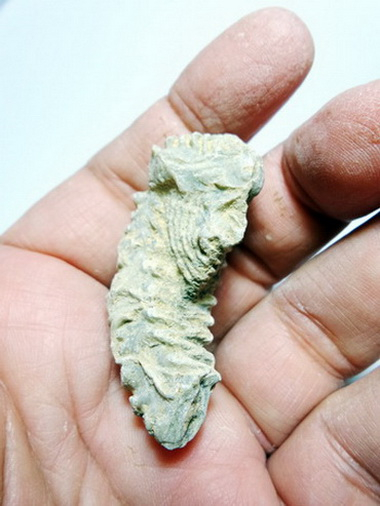


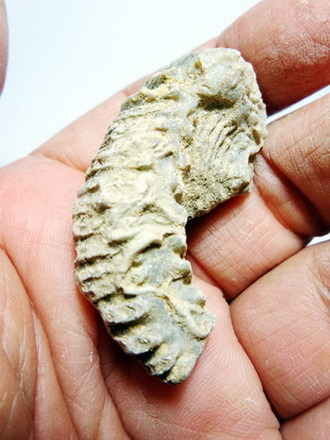
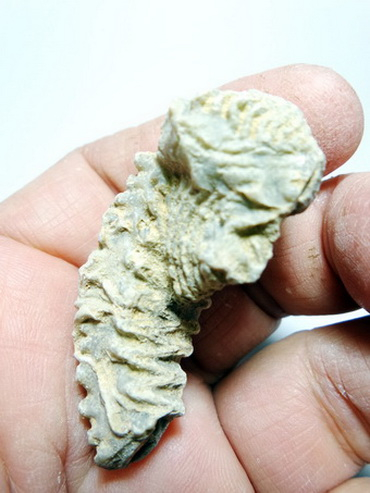
ฟอสซิลหอยนางรม (Fossil Oyster Rastellum – Cretaceous)
รายละเอียดสินค้า
(ชมสินค้าอื่นได้ที่ WWW.LCGEMS.net ขอรายละเอียดเพิ่มที่ Line ID: LCGEMS หรือ 064-3821789)
ฟอสซิลหอยนางรม เป็นพันธุ์ Carinatum Rastellum ซึ่งมีชีวิตอยู่ในโลกช่วงยุคครีเทเชียส หรือประมาณ 125 ล้านปีที่แล้ว ลักษณะเป็นหอยสองฝา ลำตัวยาว มีฝาเป็นซิคแซค
ซากดึกดำบรรพ์มีความเชื่อมั่นเพิ่มขึ้นช่วงชีวิตลดสารพิษ ลดความวิตกกังวลความเครียด สร้างความสมดุลในอารมณ์ สร้างความมั่นใจให้มากขึ้น ออร์ธอซีรัส มีอำนาจเหนือธรรมชาติและการบำบัดทางกายภาพ เสริมสร้างการติดต่อกันทางจิตและกระตุ้นความคิด ฟอสซิลมีการใช้เพื่อช่วยในการลดความเมื่อยล้าอ่อนเพลียผิดปกติ ทางเดินอาหารและโรคไขข้อ
ฟอสซิลหอยนางรม ยุคคลีเทเซียส นี้ มีสภาพสมบูรณ์ มาจากมาดากัสการ์ มีความกว้าง 25 มม. ยาว 51 มม. หนา 24 มม. น้ำหนัก 26 กรัม
This is a Cretaceous aged fossil oyster of the species Rastellum carinatum from Madagascar. It has wide, angled ribs that have led to it being called the 'denture clam'. The zig-zag join between the two shells stopped coarse dirt and debris entering the shell and damaging its soft body. Like modern oysters it lived in shallow coastal waters including the intertidal zone (the area between high and low tide) and fed on food particles that it filtered out of the sea water.
This is an extinct Fossil Oyster that is common in Jurassic age rocks. These Fossil Oysters lived in large numbers on the sea floor resting in soft sediment in quiet environments. This tells us that this part of what is now the West Midlands was under a warm, shallow, muddy sea during Jurassic times.
The curved lower shell of this Oyster raised the point where the two shells opened above the sediment surface. This stopped sediment entering the shell and made filter feeding more efficient. The thick shell acted as protection against predators such as lobsters and crabs, as well as predatory gastropods.
The uneven texture of this fossil shell is typical of oysters. The concentric ridges and furrows on the shell are ‘growth lines’ and were produced as the animal grew.
This Fossil Oyster is a bivalve mollusc because it has a shell made up of two parts or ‘valves’. The thickened and curved lower shell is equivalent to the left valve in other bivalves, and the flattened ‘lid’ is the right valve.
The scientific, or Latin, Genus name for this oyster is Gryphaea. This specimen of Gryphaea was discovered and collected in Warwickshire, in the English West Midlands.

